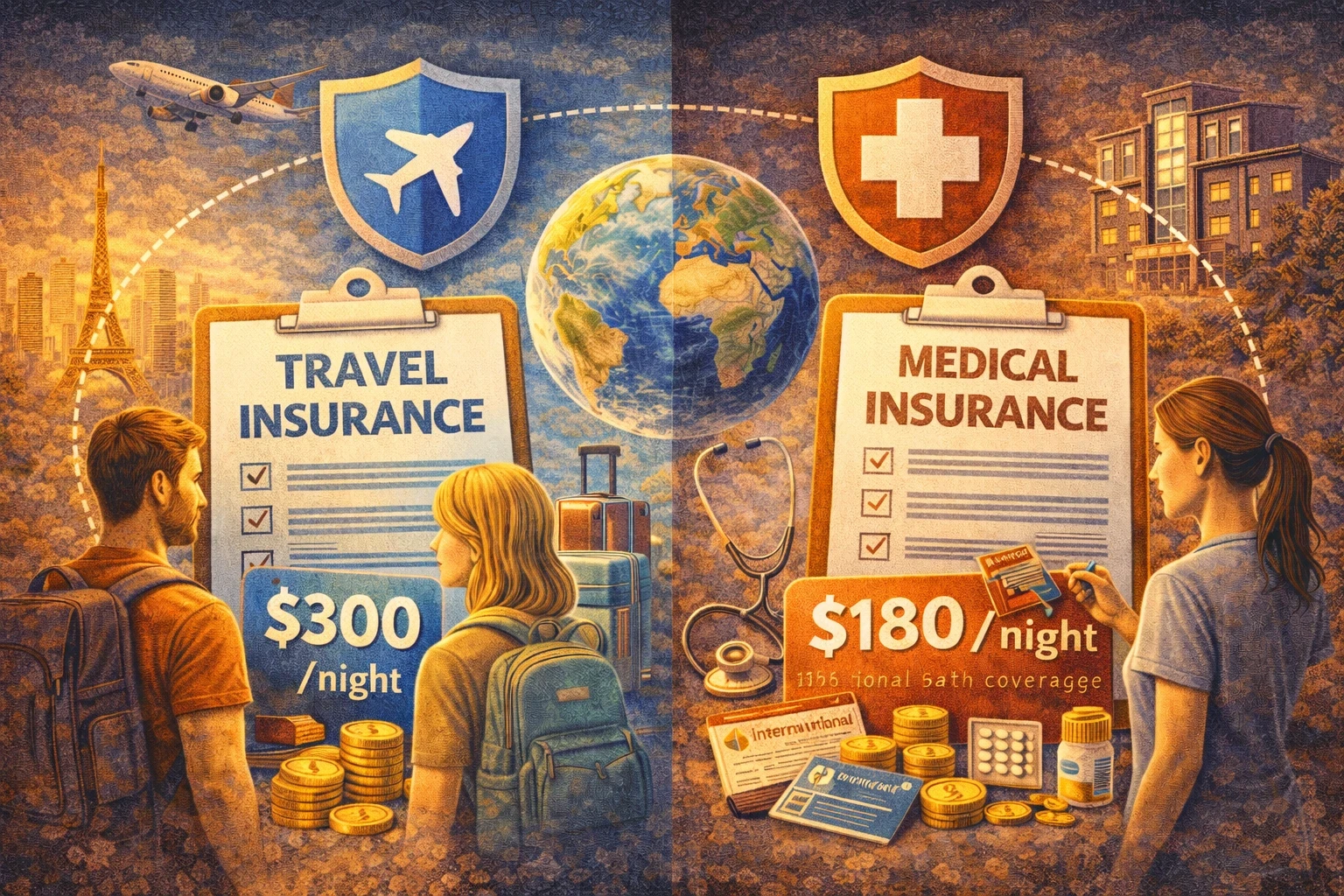
International travel feels carefree — until something goes wrong. A sudden illness, an accident, or an unexpected hospital bill in a foreign country can turn a dream trip into a financial nightmare. That’s where insurance matters most. But “travel insurance” and “medical insurance” (or international health insurance) are often confused. They both protect you, but in very different ways.
This guide explains their differences clearly, using the latest research and comparisons. It’s designed for high-intent travelers who want definitive answers before buying coverage. You’ll learn what each type covers, when to choose one over the other, and how to combine them for maximum peace of mind.
What travel insurance actually covers
Travel insurance is a trip-specific policy you buy for a defined period — usually the duration of your trip. Its scope is broad by design because it covers risks that can derail your travel plans, not just your health.
Typical travel insurance benefits include:
Medical emergencies abroad
Travel insurance usually covers emergency medical treatment and sometimes limited hospital care if you fall sick or get hurt on your trip. It can also pay for emergency evacuation or repatriation back to your home country if needed. These key medical benefits are often included because many domestic health plans don’t work overseas.
Trip disruption and cancellations
If your flight is canceled, your bags are lost, or your hotel booking becomes unusable, travel insurance steps in to reimburse non-refundable costs.
Loss or theft of personal items
Gear, passports, electronics, and baggage are often covered up to a limit.
Travel delay assistance
If you’re delayed due to weather or airline issues, you may get compensation for meals and accommodation.
Travel insurance is best for:
Short vacations and business trips
Travelers with infrequent trips
Trips under 3–6 months
Anyone who needs protection against travel risks beyond just medical emergencies
Travel insurance protects broader travel risks. But this breadth also limits depth, especially for medical needs beyond emergencies.
What medical insurance (international health insurance) covers
Medical insurance — particularly international health insurance — is fundamentally a healthcare plan, not a travel plan. It functions more like what you expect from a domestic health policy: ongoing medical treatment, hospital care, routine checkups, and chronic disease support.
Key differences from travel insurance include:
Comprehensive medical care
International health insurance covers:
Extensive hospital stays
Routine, preventive, and outpatient care
Specialist visits and diagnostic services
Chronic or ongoing condition management
Pre-existing conditions (depending on plan rules)
These aspects go far beyond the emergency medical coverage typical in travel insurance.
Long-term coverage
Rather than covering just the days of a single trip, international health insurance covers you continuously, often on an annual basis. This is crucial if you:
Spend many months abroad
Live overseas for work or study
Plan to relocate or spend lengthy periods outside your home country
Flexibility of care location
Depending on the plan, you can receive treatment in most countries within your policy’s geographical region — not just during one trip.
Fundamental differences in one comparison
To decide what you need, consider what each type actually protects against.
| Feature | Travel Insurance | International Health Insurance |
|---|---|---|
| Duration | Trip-specific (days to months) | Long-term (annual or multi-year) |
| Medical Coverage | Emergency only | Emergency + routine + broad care |
| Trip Risk Cover | Cancellation, lost baggage, delays | Not usually included |
| Pre-existing Conditions | Often excluded | May be covered with underwriting |
| Chronic Care | Rarely covered | Usually included |
| Evacuation/Repatriation | Often included | Often included |
| Best for | Short trips, vacations, business | Long stays, expats, frequent long travel |
| Compiled from multiple insurer guidance on policy differences. |
Why travel insurance is still essential for vacations
Many travelers think “my health insurance at home covers me.” That is often false.
Nearly all standard domestic health policies exclude overseas medical costs, especially emergency care abroad. Even if your plan tries to offer limited international benefits, they are usually weak, capped, or reimbursement-only (you pay first and claim later).
Travel insurance fills this gap by providing direct medical emergency coverage during the trip. It generally:
Covers accident and sickness abroad
Supports emergency evacuation and repatriation
Provides help and translation assistance if you’re in a foreign medical system
Includes 24/7 travel assistance services for arranging care
Without travel insurance, out-of-pocket medical bills in many countries can be extremely high, especially in places without universal healthcare.
When travel insurance is not enough medically
Travel insurance often excludes or limits:
Routine medical care (checkups, non-emergency doctor visits)
Treatment of pre-existing conditions
Chronic illness management
Dental procedures (beyond emergency dental)
Elective procedures unrelated to incidents on the trip
For example, if you break a bone on holiday, travel insurance would likely cover treatment. If you need ongoing care for diabetes while abroad, travel insurance won’t help. In contrast, an international health insurance policy would.
When international health insurance is necessary
International health insurance becomes the right choice if:
You’ll be abroad for several months or longer
If your stay exceeds typical travel insurance durations (often up to 6–12 months) and you need continuous coverage, an international health plan is designed for that.
You need routine or ongoing medical care
Plans that cover outpatient services, specialist visits, and prescriptions give you more stability than emergency-only travel policies.
You relocate for work, study, or family
Being a long-term resident abroad generally disqualifies you from standard travel insurance and pushes you toward international health insurance or a local health plan.
Cost differences: what to expect
Travel insurance tends to be much cheaper because it is short-duration and narrowly focused on travel risks. A typical travel health policy for a couple of weeks to a few months can often cost a few tens to a few hundred dollars, depending on age, destination, and coverage limits.
International health insurance is more expensive because it provides broad, ongoing medical coverage — similar to a domestic health plan. You pay a higher premium in exchange for deeper care access and routine treatment support.
Choosing the right coverage for your trip
Here’s a decision framework to help you decide:
1. Evaluate your trip duration
Under 90 days: Travel insurance usually suffices.
90 days to one year: A long-duration travel or travel medical plan may be needed.
Over one year: Consider international health insurance if routine care or continuous coverage is important.
2. Assess your medical needs
Only emergency protection needed? Travel insurance is designed for that.
Ongoing treatment or routine care expected? A broader health plan is better.
3. Consider your home insurance limits
Check if your domestic health insurance covers overseas treatment. Most do not, so travel insurance or international health insurance will be necessary for medical costs abroad.
Practical coverage checklist before you buy
Travel insurance
Emergency medical coverage and evacuation
Trip cancellation/interruption
Lost baggage and travel delay cover
Coverage limits and deductibles
Exclusions (pre-existing conditions, adventure sports)
International health insurance
Emergency and non-emergency medical coverage
Hospital and outpatient services
Chronic disease management
Territory of coverage (countries included)
Policy renewal terms
Always read the fine print and verify what is covered, what is excluded, and whether the insurer operates in your travel destinations.
Pairing travel and health insurance
In many cases, travelers benefit from both:
Travel insurance protects travel risks (baggage, cancellations, emergency transport costs)
International health insurance protects broad medical risks during prolonged stays
For frequent travelers or digital nomads, having a long-term health plan plus travel coverage for trip-specific risks can be the most comprehensive strategy.
Final takeaway
Travel insurance and medical insurance serve different but sometimes overlapping purposes.
Travel insurance is short-term and trip-focused, providing emergency medical coverage alongside trip protection benefits.
International health insurance is a long-term medical plan designed to provide broad, ongoing healthcare abroad, including routine and emergency care.
Choose based on the length of stay, expected medical needs, and how long you will be out of your home country. For many travelers, a combination or a carefully selected plan that matches both travel and healthcare needs provides the best peace of mind.