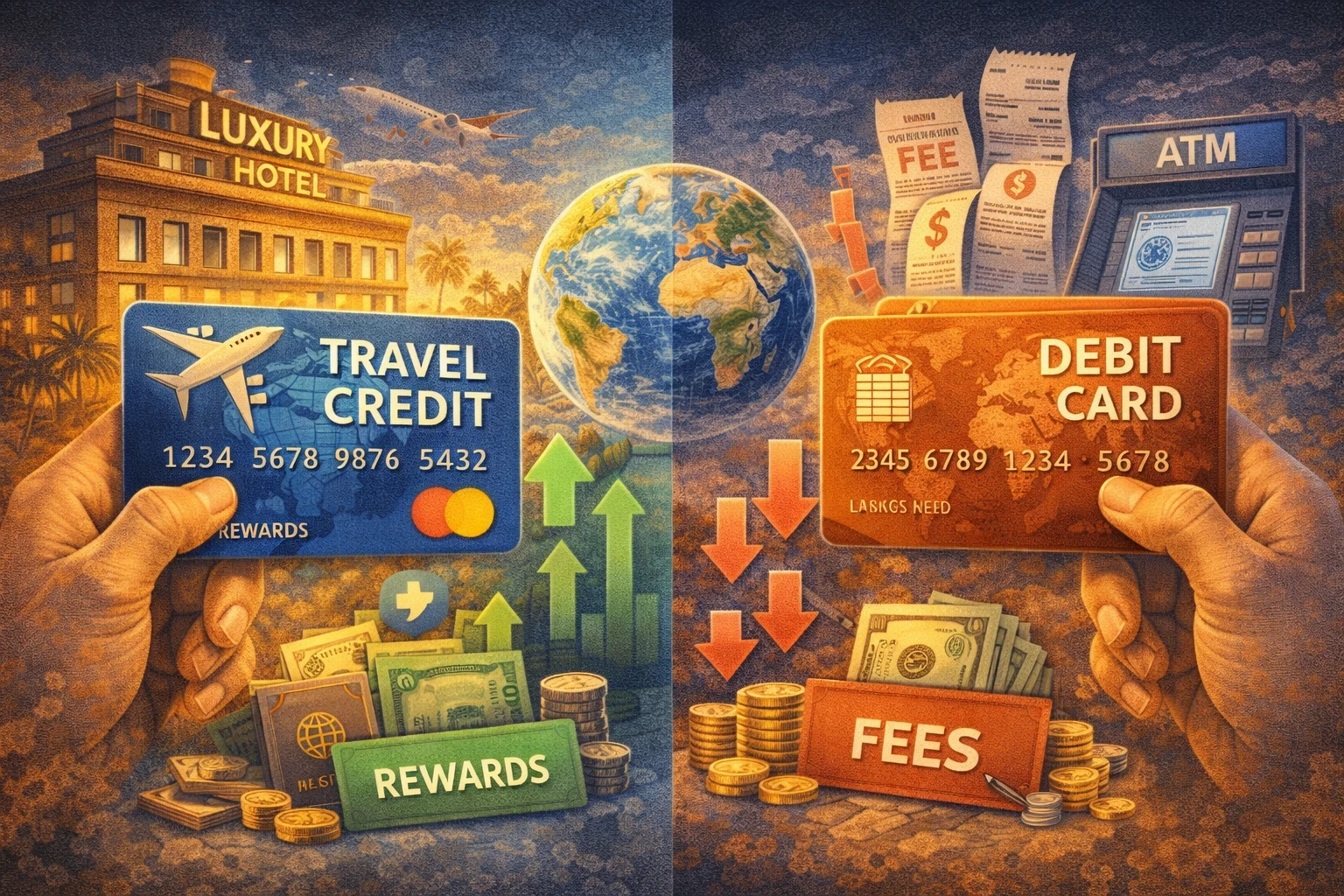
When you travel abroad, how you pay matters just as much as where you stay and what you see. Debit and credit cards both work internationally, but they behave very differently — and one choice can quietly cost you hundreds of dollars during a long trip.
This guide explains how credit cards and debit cards compare for international spending, what each one costs in real terms, and how to pick the best option for day-to-day travel expenses. It also digs into security, fees, acceptance, and practical strategies so you don’t overspend without knowing it.
The information below is built from current travel finance guidance and updates on card fees and international use from real sources.
1) How debit cards work abroad
A debit card is basically a digital extension of your bank account. When you use it internationally, the amount is taken directly from your checking or savings balance.
Pros of using a debit card for international spending
Easy budgeting: You only spend what you have, so it’s hard to go into debt. This helps keep your travel budget under control.
Cash access: Most debit cards let you withdraw money from foreign ATMs, giving access to local currency almost anywhere.
No interest charges: You’re not borrowing money for purchases, so you never pay interest as long as your account balance covers the spend.
Cons debit cards face overseas
Foreign transaction fees: Many banks apply a currency conversion mark-up or foreign transaction fee of around 1–3% on purchases and ATM withdrawals.
ATM fees: In addition to conversion charges, some ATMs charge a flat fee (often $2–$5) per withdrawal.
Rate variability: Your debit card transaction uses the live exchange rate at the moment of processing, which means you can pay more if rates deteriorate.
Limited protections: Debit cards typically offer weaker fraud protection compared to credit cards, and stolen or skimmed ATM data can lead to direct account losses that take time to recover.
Example: A vendor might charge your debit card, then your bank converts it at its own rate and adds a markup. That 1–3% markup can add up quickly over a long trip.
2) How credit cards work abroad
A credit card is a short-term loan from the issuer. You borrow money up to your limit, then repay it later — usually with an interest-free period if you pay in full each month.
Pros of using a credit card overseas
Wider acceptance: Credit cards are often more widely accepted than debit cards, especially for hotel reservations, car rentals, and larger purchases.
Fraud protection: Credit cards generally come with better fraud and dispute rights, meaning you can challenge unauthorized charges more easily than on a debit card.
Perks and rewards: Many cards offer travel benefits like lounge access, travel insurance, points/cashback, and sometimes 0% foreign transaction fees on eligible cards.
Extended float: If you pay off the balance before interest hits, you essentially get a short, interest-free loan — useful for larger expenses.
Cons credit cards face abroad
Foreign transaction fees: Unless the card is travel-specific, many credit cards charge 2–3% on foreign purchases.
Cash advance penalties: If you use your credit card to withdraw cash, you often pay a high cash advance fee plus immediate interest with no grace period.
Debt risk: If you don’t pay your balances in full, interest charges can stack quickly and outweigh travel rewards.
Point to note: Even if a credit card offers no foreign transaction fee, you still pay an exchange rate set by the card network (Visa/Mastercard), which may be slightly different from mid-market.
3) Foreign transaction fees explained
Whether debit or credit, fee structures matter more overseas than at home.
Many credit cards charge 2–3% on foreign purchases.
Some debit cards also tack on similar fees unless they are fee-free accounts.
That means if you spend $1,000 abroad, fees alone could add $20–$30 or more across purchases and ATM charges unless your cards waive these charges.
Some banking products now let debit users avoid foreign transaction fees, often tied to specific account types or subscription plans.
Tip: Always ask your bank whether your card charges foreign transaction and ATM fees before you travel.
4) Security and fraud protection comparison
Security matters more when you’re away from familiar banking systems.
Debit cards
Linked directly to your bank account, so unauthorized use can immediately dent your funds.
Fraud investigations and reimbursements can take time, which interferes with daily travel cash flow.
Credit cards
Typically offer stronger legal protections and easier dispute processes.
You usually aren’t on the hook for fraudulent charges beyond a small amount (varies by issuer).
This difference makes credit cards a preferred tool for bigger or riskier transactions, while debit cards play a more modest support role.
5) Acceptance and practical use
Some merchants abroad prefer one type of card over another.
Credit cards are often required for rentals, hotels, and services that need a pre-authorisation “hold.”
Debit cards are widely accepted at ATMs and POS terminals, but in some markets they may be rejected for reservations or higher-risk bookings.
This means your ideal travel wallet typically contains both — so you can pay deposits with credit and access cash with debit.
6) When to use which: a practical guide
Here’s how travelers generally decide what to use on a trip.
Use your credit card for:
Big purchases like flights, hotels, and tours
Car rentals and reservations that require pre-auth
Transactions where rewards or protection matter
Situations where lost or stolen card liability is serious
Use your debit card for:
ATM withdrawals when cash is necessary
Everyday small transactions where you don’t want to overspend
Backup access when credit limits are tight
Avoid using cards for:
Cash advances on credit cards — these often come with high fees and immediate interest.
7) Hidden cost traps and how to avoid them
Dynamic currency conversion (DCC)
Many payment terminals ask if you want to “pay in your home currency.” Always choose local currency — letting the card network do the conversion almost always gives a better rate.
ATM fees stack up
Even if your bank doesn’t charge a foreign transaction fee, many ATMs impose a machine fee. Plan withdrawals to minimize this — many travelers make one larger withdrawal rather than multiple small ones.
Card issuer warnings
Notify your bank before travel. This reduces fraud blocks and frozen card issues that interrupt spending.
8) Bonus: travel-specific card products
Traditional credit and debit cards are not the only tools. Many travelers also use:
Prepaid travel/forex cards: You load foreign currency in advance, often with locked exchange rates and lower fees than regular debit cards.
Multi-currency cards: They hold different currencies and let you spend without daily conversion uncertainty.
These are not credit or debit cards per se, but they often combine cost benefits with security advantages, making them a smart third option alongside your main cards.
9) A practical fee comparison table
| Feature | Debit Card | Credit Card |
|---|---|---|
| Foreign transaction fee | Varies (often 1–3%) | Varies (often 2–3%) |
| ATM withdrawal charges | Often $2–$5 per withdrawal | High fees + interest |
| Fraud protection | Basic | Stronger dispute protections |
| Pre-auth acceptance | Sometimes limited | Widely accepted |
| Rewards | Rare | Often significant |
10) Final checklist before you travel
Before departure
Check if your debit/credit cards allow international transactions.
Ask your bank about foreign transaction and ATM fees.
Set travel notifications on your accounts.
During travel
Always pay in local currency.
Use credit for big transactions, debit for ATM cash.
Keep one backup card stored separately.
Emergency backup
Carry a small amount of local currency for cash-only situations.
Consider a travel/forex card as an additional tool for locked rates and budgeting.
Final thought
Neither debit nor credit is “the best” for every situation. The smartest approach is a balanced wallet: use credit cards for protection, rewards, and large transactions, and use debit cards for controlled spending and cash access. Being aware of fees, exchange rates, and how each tool works protects your travel budget and prevents surprise charges you didn’t plan for.