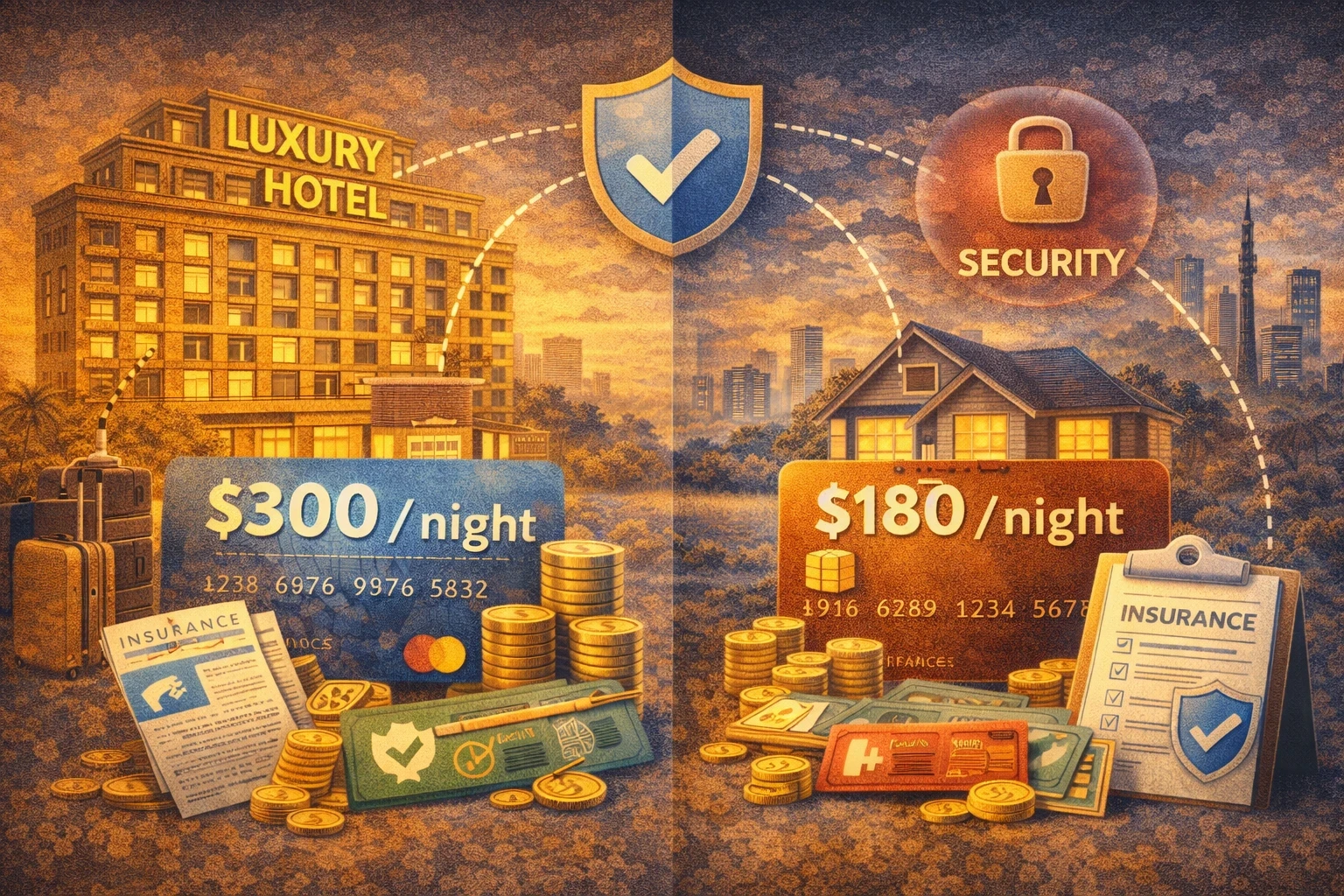
Choosing where to stay often shapes the entire travel experience. Over the last decade, short-term rentals have grown from a niche option into a mainstream choice that directly competes with traditional hotels. By 2025–2026, travelers face a clear decision point: predictable hotel stays or flexible short-term rentals.
This guide breaks down real costs, security risks, and insurance coverage so you can choose based on facts rather than assumptions.
The Changing Accommodation Market in 2025–2026
Global travel demand continues to rise after full recovery. Industry data from hospitality research firms and booking platforms shows:
Hotels have increased dynamic pricing to manage demand spikes.
Short-term rentals now operate under stricter local regulations in many cities.
Travelers show higher concern for refund policies, safety standards, and insurance protection than before.
The result: the cheapest or safest option depends heavily on trip length, destination, and risk tolerance.
Cost Comparison: Hotels vs Short-Term Rentals
Upfront Price Transparency
Hotels usually present a clear nightly rate. Taxes and service charges appear during checkout and rarely change after booking.
Short-term rentals often advertise lower nightly rates, yet final pricing includes:
Cleaning fees
Platform service fees
Local occupancy taxes
Extra guest charges
In many cases, the final total ends up 15–35% higher than the displayed price.
Short Stays (1–3 Nights)
Hotels often win on cost for brief stays.
Why:
No cleaning fees
Loyalty discounts
Same-day price drops on unsold rooms
Short-term rentals struggle here because fixed fees apply regardless of stay length.
Medium Stays (4–7 Nights)
This range creates price parity.
Hotels offer:
Weekly promotions
Free housekeeping
Breakfast or airport transfers
Short-term rentals offer:
Kitchen savings
More space
Laundry access
The better option depends on lifestyle needs rather than price alone.
Long Stays (8+ Nights)
Short-term rentals usually become cheaper.
Reasons:
Weekly or monthly discounts
Lower per-night average
Reduced dining expenses
Extended-stay hotels can still compete, yet availability varies by city.
Hidden Costs Many Travelers Miss
Hotels
Resort fees
Paid parking
Premium Wi-Fi tiers
Early check-in or late checkout fees
Short-Term Rentals
High cleaning fees
Damage deposits
Utility usage limits
Cancellation penalties
Cost savings only exist when these extras get evaluated early.
Security Comparison: Personal Safety and Property Risk
Physical Security Standards
Hotels operate under strict safety codes:
24-hour reception
CCTV coverage
Fire exits and alarms
Trained staff for emergencies
Short-term rentals depend on individual hosts. Security features vary widely.
Some properties include:
Smart locks
Exterior cameras
Secure buildings
Others rely solely on standard door locks.
Emergency Response
Hotels provide immediate assistance during:
Medical emergencies
Fire alarms
Evacuations
Lost access to rooms
In short-term rentals, response time depends on host availability and local emergency services.
Theft and Liability Risk
Hotels typically assume responsibility for in-room safety, often providing safes and insured storage.
Short-term rentals place responsibility on the guest. Loss claims often become complex and slow.
Insurance Coverage: A Major Decision Factor
Hotel Stay Insurance Protection
Hotels carry commercial liability insurance that covers:
Guest injuries in common areas
Property damage caused by building issues
Certain theft claims
This protection applies automatically during your stay.
Short-Term Rental Platform Coverage
Platforms like Airbnb promote host protection programs. These policies protect hosts, not guests.
Guest coverage usually excludes:
Personal injury
Lost belongings
Medical emergencies
Travel Insurance Compatibility
Most standard travel insurance policies:
Clearly recognize hotel stays
Apply fewer exclusions
Short-term rentals may require:
Proof of host registration
Explicit policy wording
Additional endorsements
Failure to check this detail leads to denied claims.
Cancellation and Refund Reliability
Hotels
Hotels generally offer:
Free cancellation within 24–72 hours
Flexible date changes
Same-day refund processing
Major chains follow consistent rules across regions.
Short-Term Rentals
Policies depend on the host:
Non-refundable bookings remain common
Partial refunds often exclude service fees
Disputes may take weeks to resolve
Flexibility matters most for travelers booking far in advance.
Best Choice by Traveler Type
Business Travelers
Hotels remain the safer option due to:
Reliable internet
Invoice support
Security standards
Consistent check-in times
Families
Short-term rentals work well for:
Space
Kitchens
Multi-room setups
Hotels suit families needing:
Daily cleaning
On-site assistance
Central locations
Solo Travelers
Hotels offer:
Better security
Social visibility
Lower personal risk
Short-term rentals require stronger self-awareness and destination research.
Digital Nomads
Short-term rentals win for:
Monthly pricing
Workspace flexibility
Home-style living
Extended-stay hotels remain a solid alternative in major cities.
Common Myths Debunked
Myth 1: Short-term rentals are always cheaper
Reality: Fees erase savings on short stays.
Myth 2: Hotels lack privacy
Reality: Modern hotels offer private access floors and soundproof rooms.
Myth 3: Platform guarantees equal insurance protection
Reality: Guest protection remains limited.
Myth 4: Hotels charge more in peak seasons only
Reality: Both options raise prices during high demand.
Practical Booking Tips for 2025–2026
Compare total checkout prices, not nightly rates
Check local rental regulations before booking
Read cancellation terms line by line
Confirm travel insurance eligibility
Favor hotels in high-risk destinations
Use rentals only from verified hosts with long histories
Final Verdict
Hotels provide predictability, security, and built-in insurance advantages. Short-term rentals offer space and cost benefits for longer stays with higher planning responsibility.
There is no universal winner. The right choice depends on:
Length of stay
Risk tolerance
Insurance needs
Travel purpose
Travelers who compare beyond surface prices make fewer costly mistakes and enjoy smoother trips.